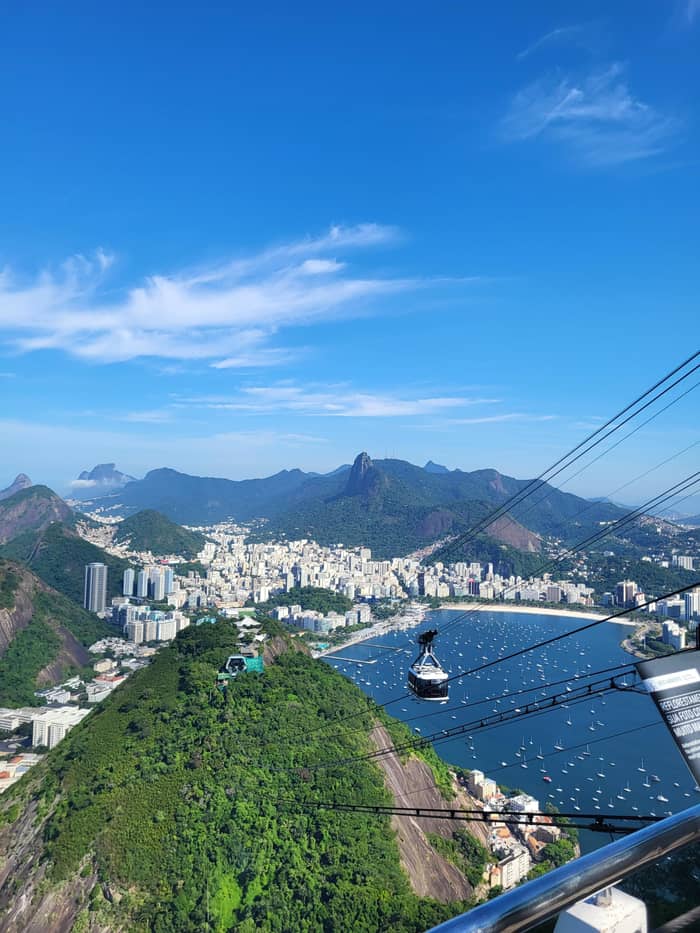
5 hours
Rainforest hike
Falls, caves and Vista Chinesa
- PickupIncluded
- HighlightThe Bat Cave
- GuideEnglish, Spanish, Portuguese
Cost for your group
Choose from 4 options
Pick a jeep or a hike and set your group size.
≈
View≈
View≈
View≈
ViewStarting prices on GetYourGuide, exchanged at the ECB reference rate. The booking page gives the exact price.
The Tijuca rain forest grows inside the city: waterfalls, caves and viewpoints a short drive from the beach, with jeep tours, guided hikes and a history of who planted it.
Editorial team, riodejaneirotour.click · Updated November 11, 2026 · Takes 8 min
Quick look
The Tijuca rain forest covers the mountains in the middle of Rio, so close to the beaches that the drive from your hotel to the first waterfall is a short one. It belongs to Tijuca National Park, which says it has been Brazil's most visited national park for 18 years in a row, with almost 5 million visitors in 2025.9 Abroad it is known as the planet's biggest city forest planted by hand,10 and that word, replanted, is the key to its story.
The park opens 3 sectors to visitors, Floresta, Serra da Carioca and Pedra Bonita with Pedra da Gávea.11 Serra da Carioca holds the postcards, from Corcovado and Mirante Dona Marta to Vista Chinesa, Parque Lage and Mesa do Imperador.12 The Floresta sector, also called Floresta da Tijuca, is the deep green part with the trails, waterfalls and picnic spots, and Pedra Bonita is the sector for climbers and hang gliders.13 The tours on this page spend much of their time in Floresta, around the Cascatinha.
Entry is free: the only paid place inside the park is Corcovado.1 The park opens every day, weekends and holidays included, from 8 AM to 5 PM.2 It runs no guiding service of its own, so anyone who wants a guide hires one privately and arrives with them.14 With no car of your own, joining a tour is easiest: the forest is easy to reach by road, but its trailheads lie far apart, and a guide knows which paths are dry, open and worth the effort on the day you go.
Where to go
| Place | What it is | Good to know |
|---|---|---|
| Cascatinha Taunay | Waterfall by the road | First stop on most tours |
| Vista Chinesa | Pagoda viewpoint | Paved access28 |
| Pico da Tijuca | Peak, 1021 m | 117 rock-cut steps at the top29,30 |
| Pedra Bonita | Hang-glider rock | Start by 4 PM31 |
| Caves circuit | 8 caves | Allow 3 hours32 |
| Mirante Dona Marta | Viewpoint, 360 m | Faces Sugarloaf33 |
Heights and times from Riotur and the park; hours can change in severe weather.34
The hills were not always green. Cleared for sugarcane and coffee, they were declared protective forests by Dom Pedro II in 1861, and the farms were expropriated so the trees could come back.5,19 You can still find coffee plants and the ruins of old farms such as Solidão, Mocke and Midosi.20 The park points out that this makes Tijuca older as a protected area than Yellowstone, the first national park, created in 1872.21
The work was entrusted to Major Manuel Gomes Archer, who began with 11 enslaved Black workers, plus overseers and paid hands.22 In 13 years they planted more than 100,000 trees, mostly Atlantic Forest species.4 The park now names them: Maria, Eleutério, Constantino, Manoel, Mateus, Leopoldo, Sabino, Macário, Clemente, Antônio and Francisco.23 On 25 March 2025 the state assembly added the 11 to Rio de Janeiro's book of heroes and heroines.18
Later managers turned the forest into a park. The French landscaper Auguste Glaziou added nooks, fountains and lakes,24 and in the 1940s the patron Raymundo Ottoni de Castro Maya opened restaurants and brought in gardens by Roberto Burle Marx.15 In 1961 most of the massif became a national park of 33 km²,16 renamed Tijuca National Park on 8 February 1967.25 A decree of 4 July 2004 enlarged it to 39.51 km², adding Parque Lage.17
The Rio de Janeiro rainforest is Atlantic Forest, and the park counts 1619 plant species, 433 of them threatened with extinction.37 Look up for tall jequitibás, flowering quaresmeiras and silk-floss trees; look down for bromeliads, orchids and begonias on the rocks. The rocks themselves are ancient, mostly gneiss about 1.7 billion years old.38 The cool, misty air under the canopy is the forest returning water to the sky.
There are 63 species of small and medium mammals, among them capuchin monkeys, sloths and the coati, the park's symbol animal.7,8 The large ones are gone: jaguars and tapirs disappeared through hunting and habitat loss.39 Birdlife is richer, with 226 species,6 including the black-billed toucan and the saíra-sete-cores, a brilliantly colored tanager.40 Early morning is when the birds call most; walk quietly and you will hear far more than you see.
The park also counts 39 amphibian species and 31 reptiles.26,27 One snake to know by name is the jararaca, which is venomous.41 It is a good reason to wear closed shoes and to keep your hands off ledges you cannot see. Feeding wildlife harms the species,42 so ignore the coatis that beg at picnic tables, however tame they look, and pack every crumb back into your bag before you move on to the next stop.
Plan your day
Match the forest to your energy and your time.
If I want views without a hike
Jeep tour
4 hours to Vista Chinesa, Mayrink Chapel and the Cascatinha.
If I want caves and waterfalls
Rainforest hike
5 hours with the Bat Cave and the Diamantina and Baronesa falls.
If I want a summit
Pico da Tijuca
If I want a swim
Horto falls or Almas
Bathing is allowed there and at the Paineiras showers.35
If I travel with children
Meu Recanto
A playground, lakes and tables in the Floresta sector.36
Ways to see it
5 hours
Falls, caves and Vista Chinesa
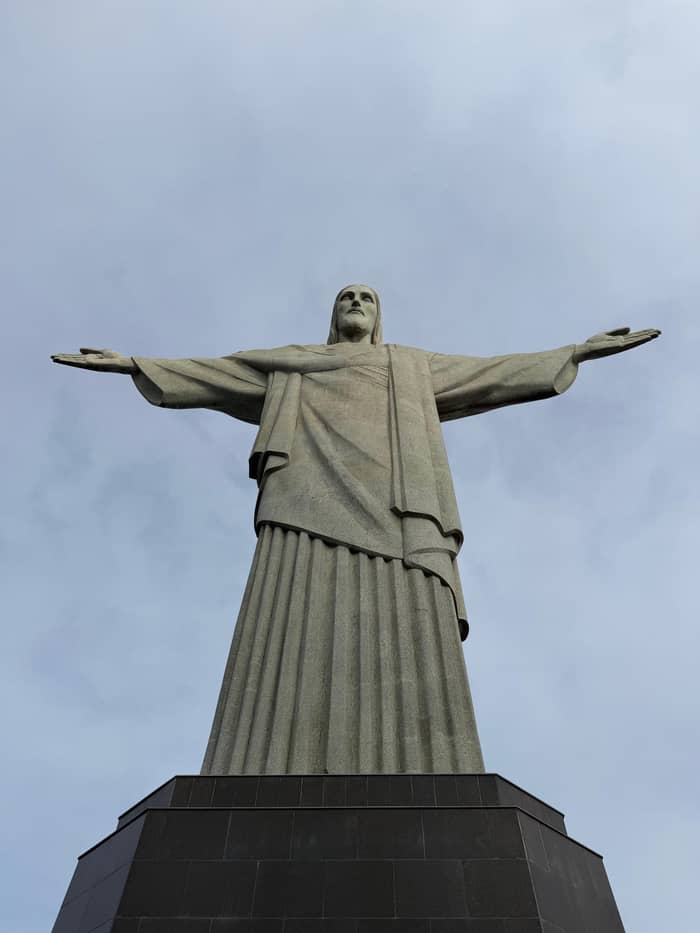
4 hours
The classic stops by open jeep
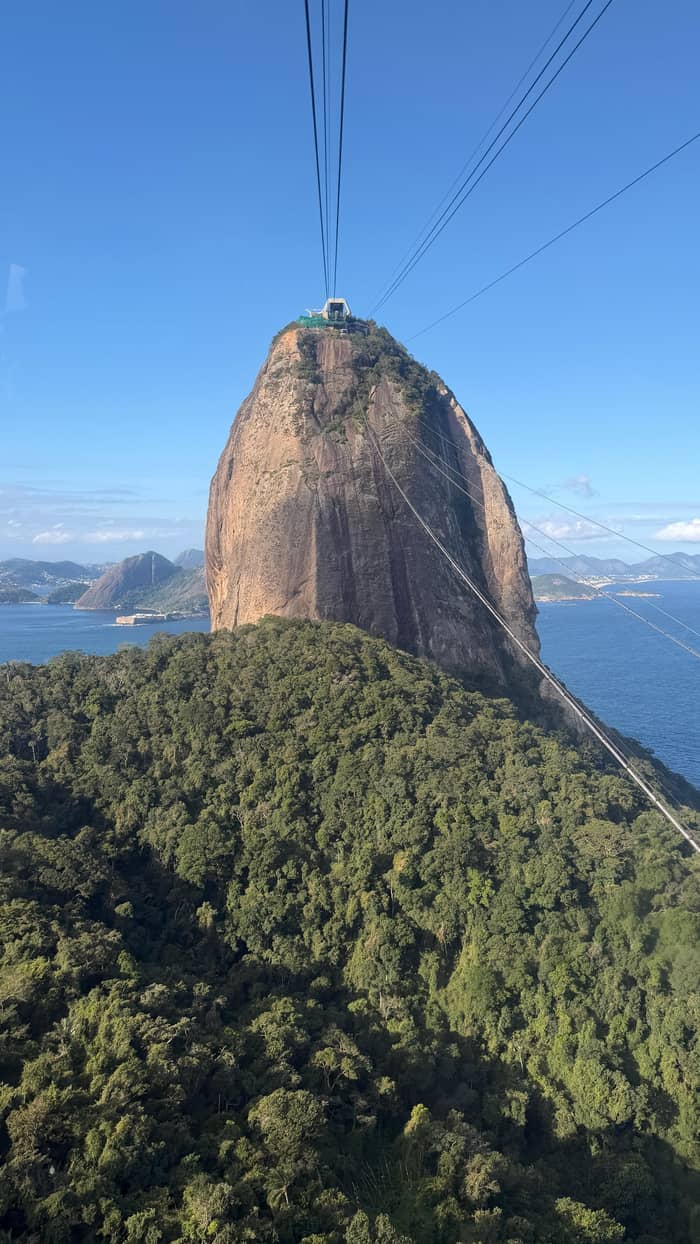
6 hours
Caves and waterfalls on a budget
The best known waterfall is the Cascatinha Taunay, one of many falls in the park alongside the Cachoeira das Almas and the Cascata Diamantina.48 Tours stop there and at the little Mayrink Chapel, then climb to the viewpoints along the road. Vista Chinesa, a pagoda built early in the 20th century as a tribute to the Chinese and to tea growing in Brazil, looks out over the green of the South Zone, and the way to it is paved.28
For a longer walk, Pico da Tijuca stands 1021 m high.29 The hike takes about an hour and a half, mostly in shade, and ends with 117 steps cut into the rock and a 120 m chain to hold.30 Pedra Bonita is shorter, about 40 minutes and rated light, though parts are steep and exposed to the sun.49 The caves circuit in the Floresta sector links 8 caves in 3 hours, and Riotur advises an experienced guide for it.32
The Visitor Center on Estrada da Cascatinha has a permanent exhibition, A Forest in the Metropolis, on how the area went from original forest to farms to park.50 On the Corcovado side, the Paineiras visitor center has an interactive exhibition on the park and the Atlantic Forest.51 At the forest's southern foot, Parque Lage offers 52 hectares of gardens and art school buildings, with a garden designed in 1840 by John Tyndale.52,53 Mirante Dona Marta, at 360 m, looks straight at Sugarloaf and the bay.33
From farmland to park
1861
Dom Pedro II orders the hills replanted.5
13 years on
More than 100,000 trees in the ground.4
1940s
Restaurants and Burle Marx gardens.15
1961
33 km² of the massif protected.16
2004
Expanded to 39.51 km² with Parque Lage.17
2025
The 11 named among the state's heroes.18
A jeep tour in Tijuca covers the classic stops in open vehicles, with short walks between them. The guided jeep tour through the rainforest lasts 4 hours with pickup, stops at Vista Chinesa, Mayrink Chapel and Cascatinha Taunay, and starts from $92. A half-day jeep tour of 4 hours visits the same stops from $68 and is wheelchair accessible. A 4x4 tour limited to 10 people adds Mirante das Canoas and the Cascata da Baronesa, from $50.
Hikes go deeper. The rainforest hike this page books runs 5 hours with pickup and walks you to Cascatinha Taunay, the Visitor Center, caves including the Bat Cave, the Diamantina and Baronesa falls and Vista Chinesa, from $76. It has 3,209 reviews averaging 4.8. A peaks, caves and falls hike of 5 hours adds Pedra Bonita, from $76, and a small-group hike of 6 hours to caves and waterfalls starts from $10.
Choose by your legs and your camera. Families, older travelers and anyone after the views without the sweat will like the jeep; the hikes suit people who want the caves, the birds and the feeling of being deep in the forest. Riotur recommends a local guide on Rio's trails,54 and the park asks hikers never to leave the official trail markings, so they do not get lost.47 Either way, a guide brings the pickup and the knowledge of which trail is open that day.
Video
Nature on PBS on YouTube · Your tap on play is what loads the video.
Tijuca National Park is internationally recognized for holding the largest replanted urban forest in the world.
Before the forest
Since 16 April 2024 walkers and cyclists can enter the Floresta sector from 6 AM, with access until 5 PM.3 Cars are let in from 8 AM to 5 PM, up to 600 a day split between morning and afternoon, plus 80 motorbikes.55 Once inside within those hours you may stay until 6 PM at the latest.56 On the Pedra da Gávea trail you must start by 2 PM, and on Pedra Bonita by 4 PM.31 Weekday mornings are the time for an early, quiet walk.
The road to Vista Chinesa and Mesa do Imperador, Estrada Dona Castorina, closes to vehicles from 7 to 9 AM on weekdays and from 7 AM to 7 PM on weekends and holidays.57 Pets are not allowed.58 Bicycles keep to paved roads and mountain bike trails.59 Bathing is allowed at the Horto falls, Quebra, Chuveiro and Primatas, at the Cachoeira das Almas in the Floresta sector and at the Paineiras showers.35
For the waterfalls, the park suggests weekdays from 8 to 11 AM, when they are quietest,46 and asks you not to use shampoo, soap or creams in the water.45 Wear non-slip shoes that can get wet: the rocks are slippery.44 For any trail it recommends comfortable clothes, a hat, closed shoes with grip, repellent, sunscreen, plenty of water and a light snack.43 Carry your rubbish out with you; there are few bins on the trails.
Tijuca is not a piece of the Amazon. It is Atlantic Forest, the coastal forest that once ran along Brazil's shore, replanted mainly with species from that biome.4 People sometimes look for an Amazon tour from Rio de Janeiro expecting a day trip; in reality the Amazon lies far to the north-west, and seeing it means flying to a city in the Amazon region and staying several nights. If a rainforest walk is what you want in Rio, Tijuca is the real thing on your doorstep.
The park describes the city's climate as tropical Atlantic, hot and humid, with wet summers and drier winters.60 Average temperatures in the city run between 18 °C and 26 °C, and the park is always a little cooler under the trees.61 Rain is plentiful, over 1,500 mm a year,62 and British travel advice puts the wet months from November to March.63 Trails turn muddy and the falls run strongest after a wet week.
Heavy rain is also when the hills are at their most fragile. The UK advice warns that flash floods and landslides are common where mountains meet the coast, such as in Rio, including tourist areas.64 The park can change its opening hours in severe weather,34 so check before you set out after a storm. On a clear day after rain, though, the leaves shine, the air smells of wet earth and the waterfalls roar.
FAQ
The only paid place in the park is Corcovado.1
The guided jeep tours last 4 hours with pickup.
Bathing is allowed at the Horto falls, Cachoeira das Almas and the Paineiras showers.35
It is Atlantic Forest, replanted mainly with species of that biome.4
Sources
Touring Rio? Ask a real person here.