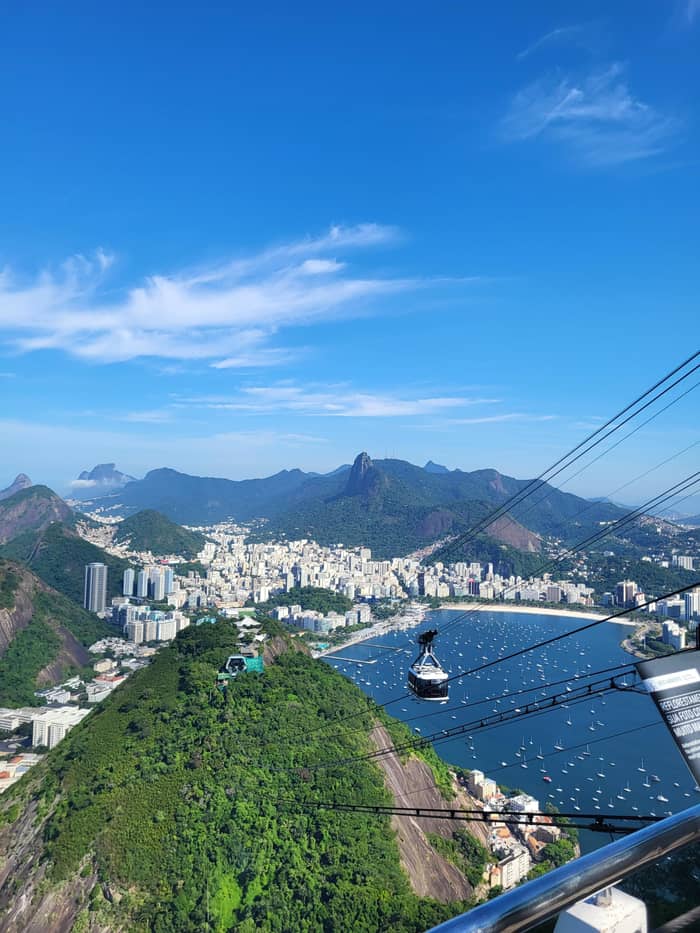
Classic
Copacabana and Leme
The city's front lawn
See this beachMap your stop
Surfing lessons: at Arpoador in Ipanema.
★ 4.7 · 133 user reviews
The quick version
The best Rio de Janeiro beaches run from Copacabana and Leme past Arpoador, Ipanema and Leblon to the long surf beaches of Barra and the wild coves of Prainha and Grumari.
Know before you go
Look at 57 stops
Pick a route, then tap a marker or a stop for notes and a Google Maps link.
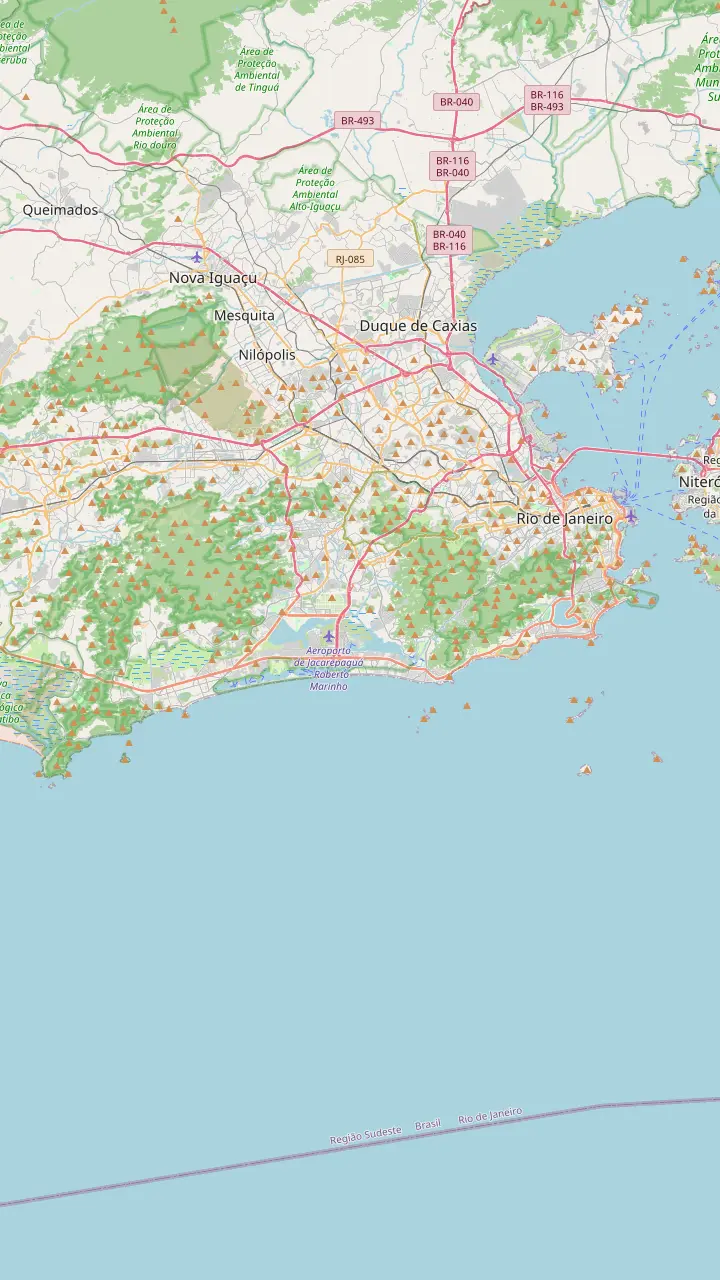
Quieter than its neighbour, under Pedra do Leme and its colonial fort.
Google MapsAlmost 4 km of sand from the Leme Fort to the Copacabana Fort, divided into posts.
Google MapsBuilt in 1914 to defend Guanabara Bay; now the Army Historical Museum.
Google Maps800 m of beach and the rock where people clap the sunset over Dois Irmãos.
Google MapsThe meeting point of Ipanema's 2 km beach, between Arpoador and Jardim de Alah.
Google MapsAbout 1 km of sand with a children's area, the baixo bebê.
Google MapsAround 400 m of sand at the foot of Dois Irmãos hill.
Google MapsStrong surf and the landing beach of the hang gliders from Pedra Bonita.
Google MapsOnly 300 m long and reached through a gated community; check the tide.
Google MapsThe longest beach in the city, 14.4 km, with 12 lifeguard stations.
Google Maps8 km of quiet sand in an environmental protection area.
Google MapsA 2.8 km cove at the end of Lúcio Costa Avenue, popular for surfing.
Google Maps700 m of surf beach inside a municipal natural park.
Google MapsA protected beach where building is prohibited, with strong waves.
Google MapsCalm water under Sugarloaf, named for its reddish sand; the cable car starts here.
Google MapsA bay beach close to the centre, facing Sugarloaf.
Google Maps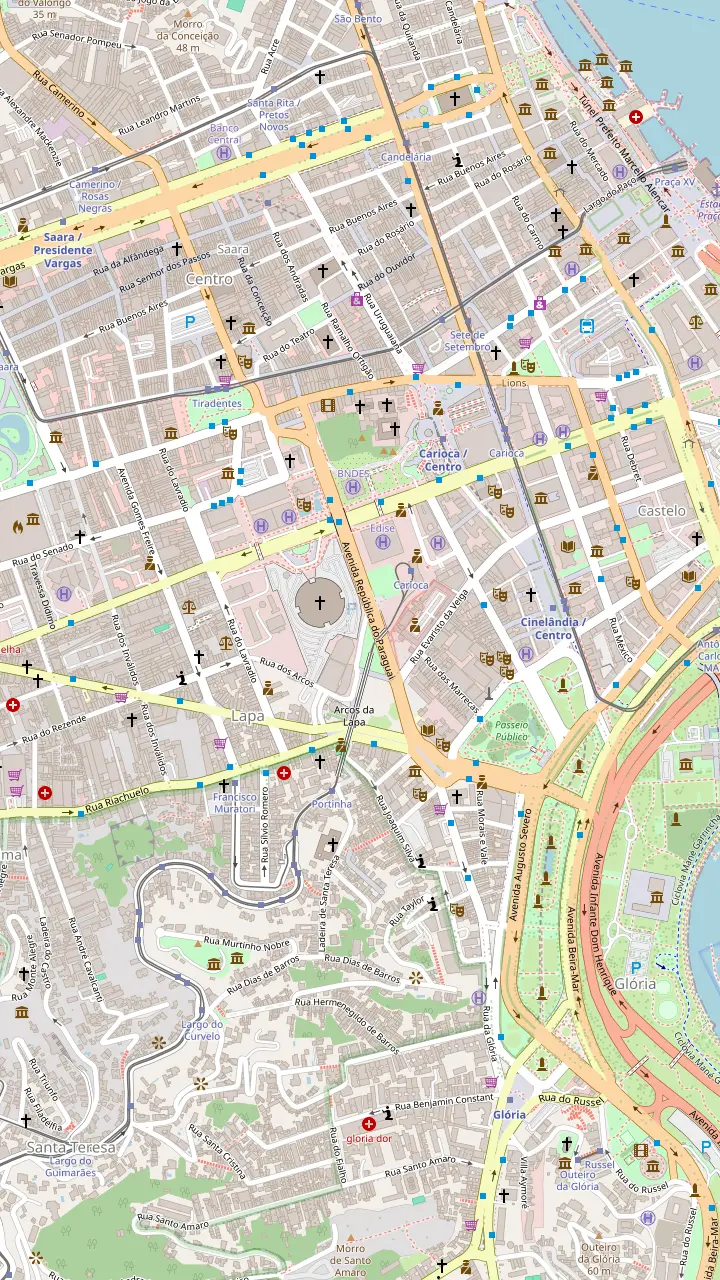
Jorge Selarón started tiling these 215 steps between Lapa and Santa Teresa in 1990.
Google MapsThe old Carioca Aqueduct, with 42 large double arches, now carries the Santa Teresa tram.
Google MapsLaurinda Santos Lobo's old mansion, now a free cultural centre with a view over the bay.
Google MapsCastro Maya's former home, listed by IPHAN in 1974, with art collections on three floors.
Google MapsThe Santa Teresa tram leaves from here every 30 minutes, 16 passengers to a car.
Google MapsA cone 75 m high outside, inspired by Chichén Itzá, with room for 20,000 people standing.
Google MapsOpened in 1909 on a design inspired by the Paris Opera; guided visits sell at the box office.
Google MapsThe historic tea room of downtown, with a second branch inside Copacabana Fort.
Google Maps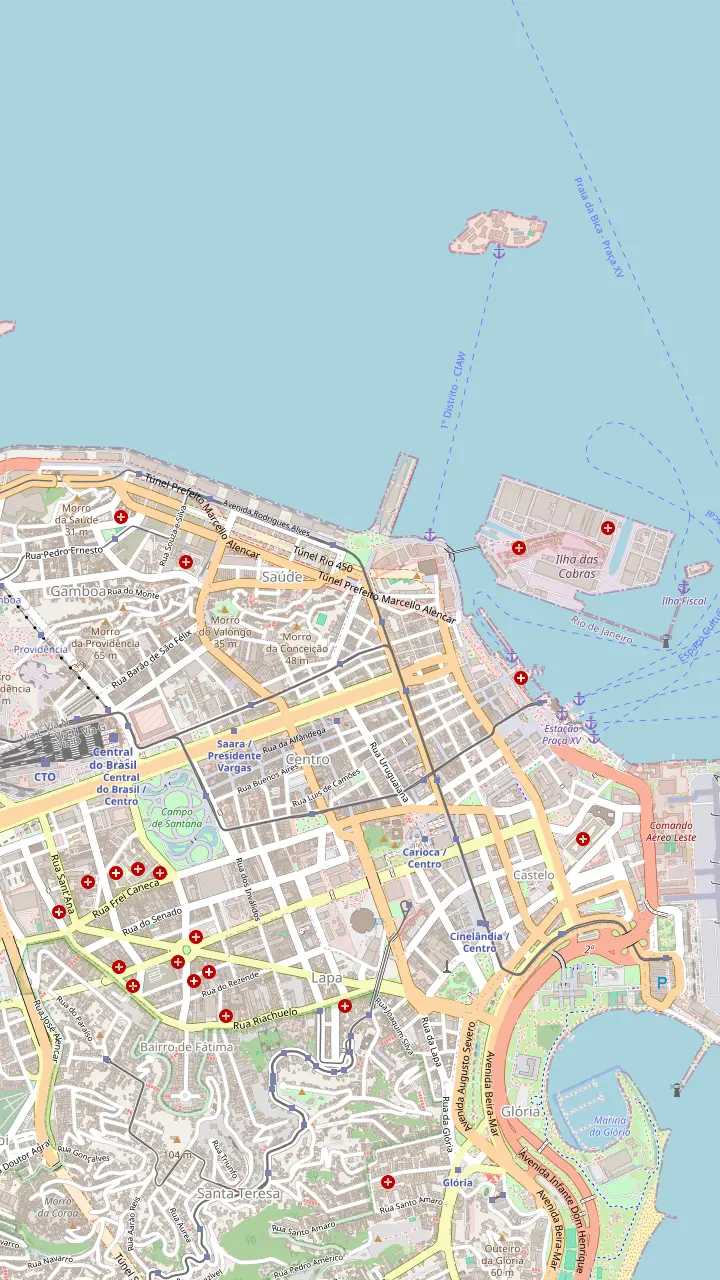
The historic tea room of downtown, with a second branch inside Copacabana Fort.
Google MapsA reading room founded in 1837 that holds 350 thousand titles by Portuguese authors.
Google MapsBuilt in 1743 for the viceroys, now a cultural centre with free entrance.
Google MapsA grand downtown church a short walk from the CCBB and Praça XV.
Google MapsA cultural centre since 12 October 1989, in a building from 1880.
Google MapsThe rock in old Little Africa where urban carioca samba was born.
Google MapsAbout 1 million enslaved Africans arrived through this wharf, built in 1811.
Google MapsA museum about the future of the planet and the impact of what we do now.
Google MapsThe Rio Art Museum on Praça Mauá, next to the Museum of Tomorrow.
Google Maps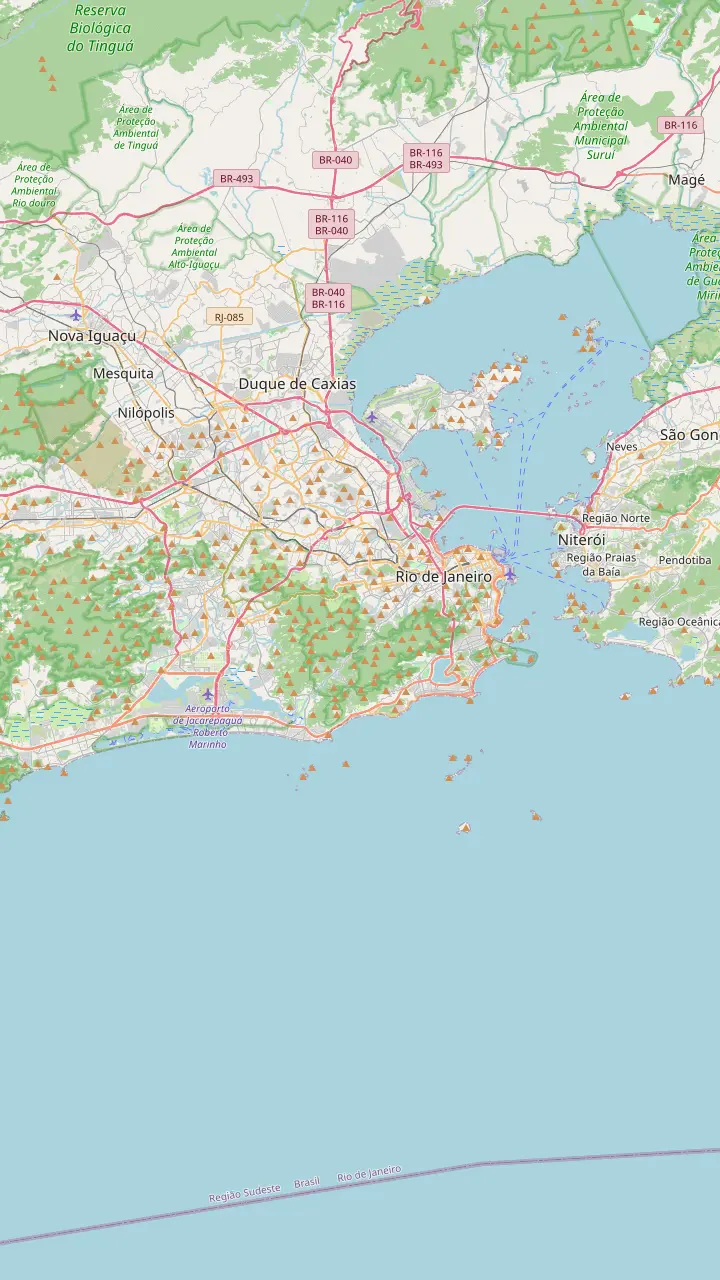
A short, quieter stretch at the start of the Copacabana seafront.
Google MapsMetro stations Cardeal Arcoverde and Siqueira Campos, and the tourist police base.
Google MapsMetro General Osório and Nossa Senhora da Paz, a 2 km beach and the Sunday hippie fair.
Google MapsMetro Antero de Quental on line 4, a family beach and the tourist police station.
Google MapsThe metro stop for the Sugarloaf bus, on Botafogo Cove.
Google MapsFlamengo Park and a bay beach, close to the centre.
Google MapsNamed by Time Out among the world's coolest neighborhoods; Sunday fair with 150 vendors.
Google MapsThe hill neighborhood called Rio's Montmartre, with its tram from 1872.
Google MapsThe cradle of bohemian Rio, under the arches.
Google MapsTheatres, churches and museums, linked by the VLT light rail.
Google MapsA quiet bay-side district below Sugarloaf, with the Mureta wall.
Google MapsRio's longest beach, metro Jardim Oceânico, and the BRT to the airport.
Google Maps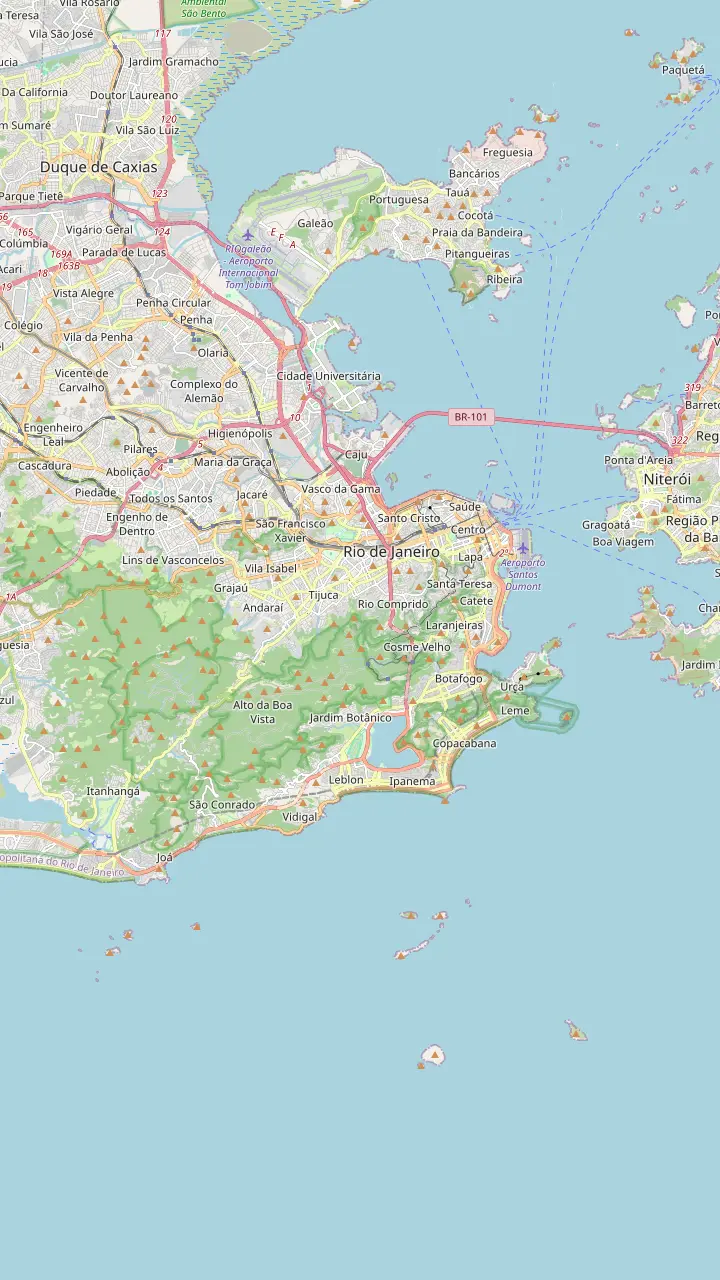
Jorge Selarón started tiling these 215 steps between Lapa and Santa Teresa in 1990.
Google MapsA museum about the future of the planet and the impact of what we do now.
Google MapsBuilt in 1914 to defend Guanabara Bay; now the Army Historical Museum.
Google Maps2 lines from Praia Vermelha via Urca Hill to the 396 m summit.
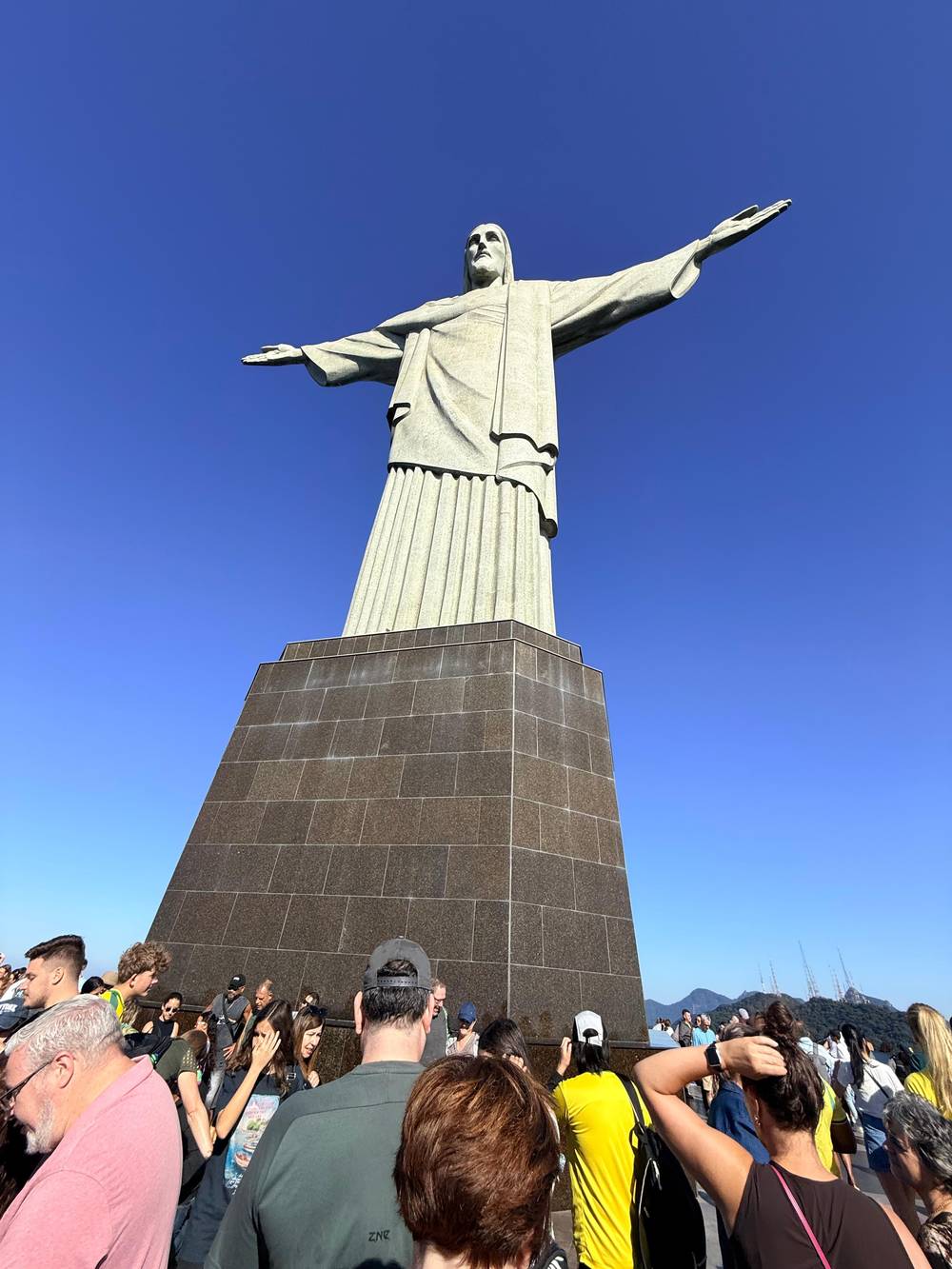
Google MapsThe statue on Corcovado, one of the postcards of Tijuca National Park.
Google MapsOpened on 16 July 1950; the stadium tour goes behind the scenes.
Google MapsCreated in 1808 by Dom João VI; arboretum open from 8 AM on most days.
Google MapsAn 8 km path around the lagoon for walking and cycling.
Google Maps52 hectares at the foot of Corcovado, with a garden designed in 1840.
Google Maps28 tanks and 4.5 million liters of salt water in the port zone.
Google MapsThe royal family's home from 1808 to 1889; free entrance.
Google MapsMore than 600 exhibitors on Praça General Osório.
Google MapsA paved viewpoint built as a tribute to the Chinese and tea growing in Brazil.
Google MapsWhere the Last Ball of the Empire was held; a 10-minute boat crossing.
Google MapsAbout 70 booths of northeastern Brazilian culture.
Google MapsThe park's visitor centre on Estrada da Cascatinha, with its permanent exhibition.
Google MapsMapping data © OpenStreetMap contributors
The best Rio de Janeiro beaches side by side: the famous curves of the South Zone, the long surf beaches of the west and the coves you reach on foot, with how to enjoy each.
Editorial team, riodejaneirotour.click · Updated November 11, 2026 · Takes 8 min
Is Rio de Janeiro on the beach? Very much so: the city counts more than 30 beaches within its own limits.1 They fall into a few groups. Inside Guanabara Bay lie calm strands such as Flamengo and Praia Vermelha; facing the open Atlantic are the famous curves of the South Zone, from Leme to Leblon; and west of the mountains run the long surf beaches of Barra da Tijuca and Recreio, ending in the protected coves of Prainha and Grumari.9,10,11
The best Rio de Janeiro beaches are not only about sand. Each one has a character, a crowd and a time of day when it shines. Copacabana is the stage for New Year's Eve, Ipanema the beach of bossa nova, Arpoador the sunset rock, Barra the long open shore. When UNESCO listed Rio's cultural landscape in 2012, Copacabana Beach was named in it alongside Sugarloaf and Tijuca National Park.12,13
A couple of local habits help you find your way. The seafront is divided into numbered posts, which locals use as addresses: friends meet at a post, and each stretch has its own mood.14 And on Sundays the seafront road along Ipanema is closed to cars until 6 PM and given over to cyclists, skaters and walkers.15 Riotur adds that Flamengo Park's avenues are shut to traffic every Sunday morning and afternoon, like the Copacabana, Ipanema and Leblon seafronts.16
Compare the beaches
| Beach | Character | Best for |
|---|---|---|
| Copacabana | Long city curve | Sport and people-watching25 |
| Arpoador | Rock and surf | Sunset3 |
| Ipanema | Post 9 crowd | A social day32 |
| Leblon | Calmer end | Families35 |
| Barra da Tijuca | Open ocean, 14.4 km | Long walks, surf5 |
| Prainha | Protected park | Surfing7 |
| Praia Vermelha | Bay beach | Calm water10 |
Character from Riotur's descriptions; sea conditions change daily, so check the flags.36
Copacabana is almost 4 km of sand from the Leme Fort to the Copacabana Fort.22 Counted together with Leme, the beach runs 4.15 km along Avenida Atlântica.2 Its black and white Portuguese-stone boardwalk forms a wave mosaic inspired by Lisbon and used by Roberto Burle Marx on the beachfront.23 It is the stage of the city's New Year's Eve party, which draws more than 3 million people every year.24
On the sand the game never stops: keep-up altinha, footvolley and volleyball, beach tennis, and in the water swimmers, rowers and paddleboarders.25 There are 2 military forts, one at each end, both open to visitors.26 Copacabana Fort was built in 1914 to defend Guanabara Bay and now houses the Army Historical Museum.18 Inside the fort there is a branch of the historic Confeitaria Colombo, so a museum visit can end with a coffee.27
Leme, at the eastern end, is the quieter neighbor, under Pedra do Leme and the colonial Fort Duque de Caxias.28 At posts 3 and 4 on Copacabana, machines sell half a liter of filtered, chilled water for 1 real if you bring a reusable bottle.29 Kiosks along the promenade serve coconut water, snacks and cold drinks, and the sand at Leme's end feels less hectic than the middle of the curve on a hot weekend.
Arpoador is 800 m of beach starting at the Copacabana Fort, surfed in summer and in winter.37 The name recalls the whales that once stopped near the coast.38 Its rock is one of the best known places in Rio to watch the sun go down behind Dois Irmãos hill,3 and when it disappears, everyone applauds.4 Riotur traces the clapping, a summer habit from Arpoador to Leblon, to the end of the 1950s.19
Ipanema runs 2 km from Arpoador to Jardim de Alah, and its liveliest meeting point is around post 9.32 It owes its fame to the 1962 song The Girl from Ipanema by Vinicius de Moraes and Tom Jobim.20 The district dates from 1894, when José Antonio de Moreira, Count of Ipanema, founded it.17 Behind Arpoador, little Praia do Diabo faces the open sea, which Riotur says is much more violent at that point;39 admire it from the little square above rather than from the water.
Leblon continues west for about 1 km, from Jardim de Alah to the cliffs of Avenida Niemeyer.34 It is the family beach, with a dedicated children's area known as baixo bebê.35 Beyond the cliffs, Vidigal Beach is a sliver of around 400 m at the foot of Dois Irmãos hill.40 For the view back over Leblon and Ipanema, walk to the lookout on the corner of Avenida Niemeyer at sunset, where the whole South Zone shore lines up in front of you.
Choose your beach
Start from the kind of beach day you have in mind.
If I want a sunset to remember
Arpoador rock
People applaud when the sun disappears behind Dois Irmãos.3,4
If I travel with small children
Leblon
Its baixo bebê is a children's area on the sand.35
If I want to learn to surf
Arpoador lesson
1 hour, groups of up to 6, from $37.
If I want empty sand
Reserva
8 km in a protected area, and seldom crowded.31
If I want calm water
Praia Vermelha
A bay beach under Sugarloaf with calm sea.10
Pick your sand
Classic
The city's front lawn
See this beach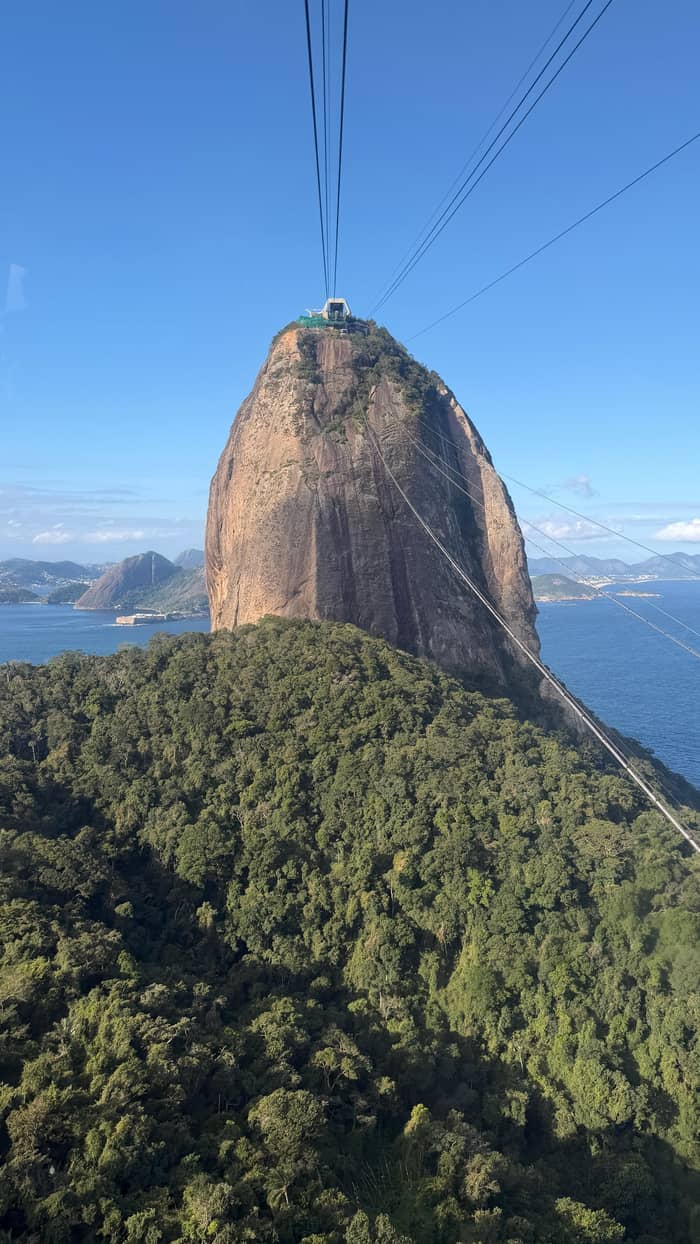
Sunset
Surf, posts and sunsets
See this beach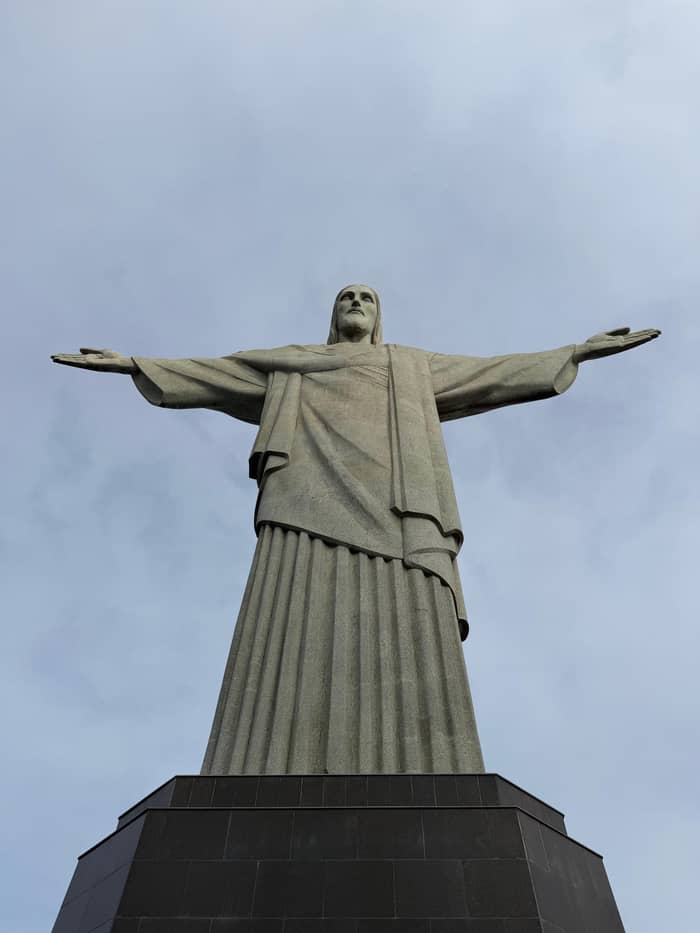
Wild
The protected west coast
See this beachSão Conrado, officially called Gávea beach, is where the hang gliders and paragliders from Pedra Bonita come in to land.66 Its waves are strong, which suits surfers more than swimmers. Joatinga, further on, is only 300 m long and is reached through a gated community on Estrada do Joá;67 Riotur reminds visitors to check the tide before going in.68 Children and older walkers need care on the rocky path down to its sand.
Barra da Tijuca is the biggest beach in the city, 14.4 km along Avenida Lúcio Costa toward Recreio, according to Riotur's Barra page.5 It has 12 lifeguard stations, and on the busiest days red flags mark dangerous water.6,107 At its eastern start, Barraca do Pepê is the city's most famous kiosk for juices and sandwiches.108 From Avenida Ayrton Senna west there is no boardwalk: the beach becomes an environmental protection area, next to the Marapendi reserve.109
Reserva Beach, between Barra and Recreio, stretches 8 km inside an environmental protection area, quiet and good for fishing.31 Recreio is a cove of 2.8 km at the end of Avenida Lúcio Costa, popular with surfers.11 These beaches feel like another city: fewer high-rises, wider sand and long walks between kiosks. Plan a car, a taxi or a bus day for them, and bring everything you need for the whole afternoon.
Price a beach activity
Choose an activity and set the number of people.
Choose from 3 options
Choose an activity and set the number of people.
≈
View≈
View≈
ViewStarting prices on GetYourGuide, exchanged at the ECB reference rate. The booking page gives the exact price.
Beach history
1894
By José Antonio de Moreira, Count of Ipanema.17
1914
Copacabana Fort is built to guard the bay.18
Late 1950s
Applause for the sun begins at Arpoador.19
1962
The song makes the beach world famous.20
1998
Boards and riders head west along the coast.21
2012
Prainha is 700 m of beach inside a municipal natural park, loved by surfers for its mix of high and medium waves.7 Next door, Grumari is a protected area where building is prohibited and the surf is strong.8 Riotur notes the waves break before they reach the bathers, which makes it a beach for surfers and swimmers alike. Abricó, beyond Grumari, is Rio's only naturist beach, over 1.5 km long inside the Grumari protection area.33
Further west, 4 wild beaches named Perigoso, Meio, Funda and Inferno lie between Grumari and Barra de Guaratiba, reachable only by trail or boat.110 The trail takes about an hour and a half to Pedra da Tartaruga, and Riotur recommends walking it with a guide.111 Praia do Secreto, between Macumba and Prainha, is a natural pool only 12 m long, and whether you can swim there depends on the tide.112 Bring water, sunscreen and snacks: Riotur calls them essential out there.110
Getting there without a car is part of the fun. The Surf Bus has run since 1998 from Largo do Machado along the beaches to Mirante da Prainha, with room for 30 passengers and their boards.21 Its route passes Botafogo, Copacabana, Ipanema, Leblon, São Conrado, Barra, Reserva, Recreio and Macumba.113 Leave early and check the sea conditions before you set out: the west coast is open ocean, and the swell changes the day.
Video
Swedish Gringo on YouTube · Your tap on play is what loads the video.
The seafront is divided into posts, which makes it easier to get oriented and match with friends
Beach day
Ocean beaches here can be rough. The UK government warns that strong currents are a danger off some beaches: ask locally before you swim, and watch the warning flags and where the lifeguards sit.36 Swim near a manned post, stay where the locals swim, and if the flags are red, enjoy the sand and the promenade instead. In the bay, at Praia Vermelha and Flamengo, the water is calmer, but check it still.10
Pack light. British advice is to keep belongings close and leave valuables at the hotel,105 and to stay off city beaches after dark.106 A towel, a little cash, a cheap phone in a zip bag and sunscreen are all a beach day needs; rent a chair and an umbrella from the stalls on the sand. When you pay a vendor by card, keep sight of the card and check the amount on the machine before you tap.104
Beyond the rules, a Rio beach day has its rhythm. Mornings are for walkers, runners and families, the middle of the day for the crowds, late afternoon for volleyball and the long walk to the sunset. Eat at the kiosks, drink coconut water, and carry your rubbish to the bins; the Praia Circular project is cutting single-use plastic on the sand.29 Leave nothing behind but footprints, and the next swimmer will thank you.
There is no single Rio de Janeiro beach tour that does it all, but there are good ways to get more from the sand. The surf lesson this page books takes 1 hour at Arpoador in Ipanema, meeting at a yellow tent on the beach, with small groups of up to 6 and instructors in English, Portuguese and Spanish, from $37. It depends on the sea: if conditions cancel it, you get a new date or a full refund.
For calmer water, a stand-up paddle session of 2 hours goes out at sunrise or sunset from post 5 on Copacabana, in groups of up to 8, from $81. To see several beaches in one go, an electric bike tour of 3 hours rides past Botafogo, Flamengo and Copacabana as well as the Selarón Steps, limited to 5 riders, from $88. Both have strong reviews and small groups, and both suit beginners.
You can also do it yourself. Bike Rio, the city's shared bike system, has 3,100 bikes and 310 stations across the centre and the south, west and north of the city.114 A Sunday ride along the closed seafront road from Leme to Leblon costs nothing but the bike.15 Use the map above to plan the stops, and leave the West Zone beaches for a full day with the Surf Bus or a car, starting early to beat the traffic.
FAQ
The city has bay beaches, the South Zone ocean beaches and the long West Zone shore.1
Riotur gives it 14.4 km, along Avenida Lúcio Costa toward Recreio.5
Rip currents run off parts of the open-ocean shore, so ask a lifeguard before you go in.36
British advice is to keep belongings close and leave valuables behind.105
It has a children's area called baixo bebê.35
It is the city's only naturist beach, in the Grumari protection area.33
Sources
Touring Rio? Ask a real person here.